Giving young people space to be themselves
A couple of weeks ago, I joined the Escape2Make crew to document their annual summer camp.
I’ve worked with Escape2Make for around 10 years now, so this wasn’t my first time working with the organisation. Over the years I’ve recruited their student interns, volunteered, worked as a youth worker and group facilitator, and now, rather wonderfully, I’ve come full circle as a social impact documentary photographer. That history is important because when you’re photographing young people, particularly in a youth work setting, the photography is only one part of the job.
The real work is building trust.
A decade of knowing the work
For this project, I spent several days with seven young people, all from different backgrounds and with very different personalities. Some had camped before. Some hadn’t.
Some already knew each other, while others were meeting for the first time. By the end of the camp, new friendships had formed, confidence had grown and everyone had accumulated a collection of stories that I’m sure will be retold for years to come.
We were hosted by the wonderful Helen Leece at The Gathering Fields, her family’s farm in Lancashire. Helen is a holistic therapist and youth worker who really gets it. She meets young people where they’re at and helps them build confidence through creativity, adventure and teamwork.
There is no one-size-fits-all approach when you’re working with young people from diverse backgrounds. Some will immediately throw themselves into an activity, while others need more time, encouragement and space to find their confidence.
Lesley Hoyle joined us too. No, not the former parliamentary House Speaker, but the herbalist and earth mother of Lancashire. Lesley is also a youth worker, helping young people connect with nature through foraging, cooking and exploring. She has endless empathy, enthusiasm and positivity, which is incredibly infectious when you’re working together.
Facilitating the adventure were Holly Watkins-New and Elsa Medd-Stengel, two brilliant youth workers from Escape2Make who supported the whole crew throughout the camp. Big thanks to Holly for finding me a spare sleeping bag, and a huge well done to Elsa for her hedgehog nursing skills (more on that later). They danced, laughed, got stuck into water fights and generally threw themselves into the whole experience. Top gals.
The place matters too
Having lived in Lancashire for over 10 years, I’ve visited some beautiful countryside locations, but The Gathering Fields is something special. It’s not just the rolling fields and beautiful surroundings. It’s a hub of activity.
The central fireplace is always stoked to keep campers warm after a day of archery, foraging, hiking, field games, painting, weaving, felting or clay work. You can understand why people head there for wellness retreats, and it’s lovely that young people have the opportunity to experience it for free through Escape2Make.
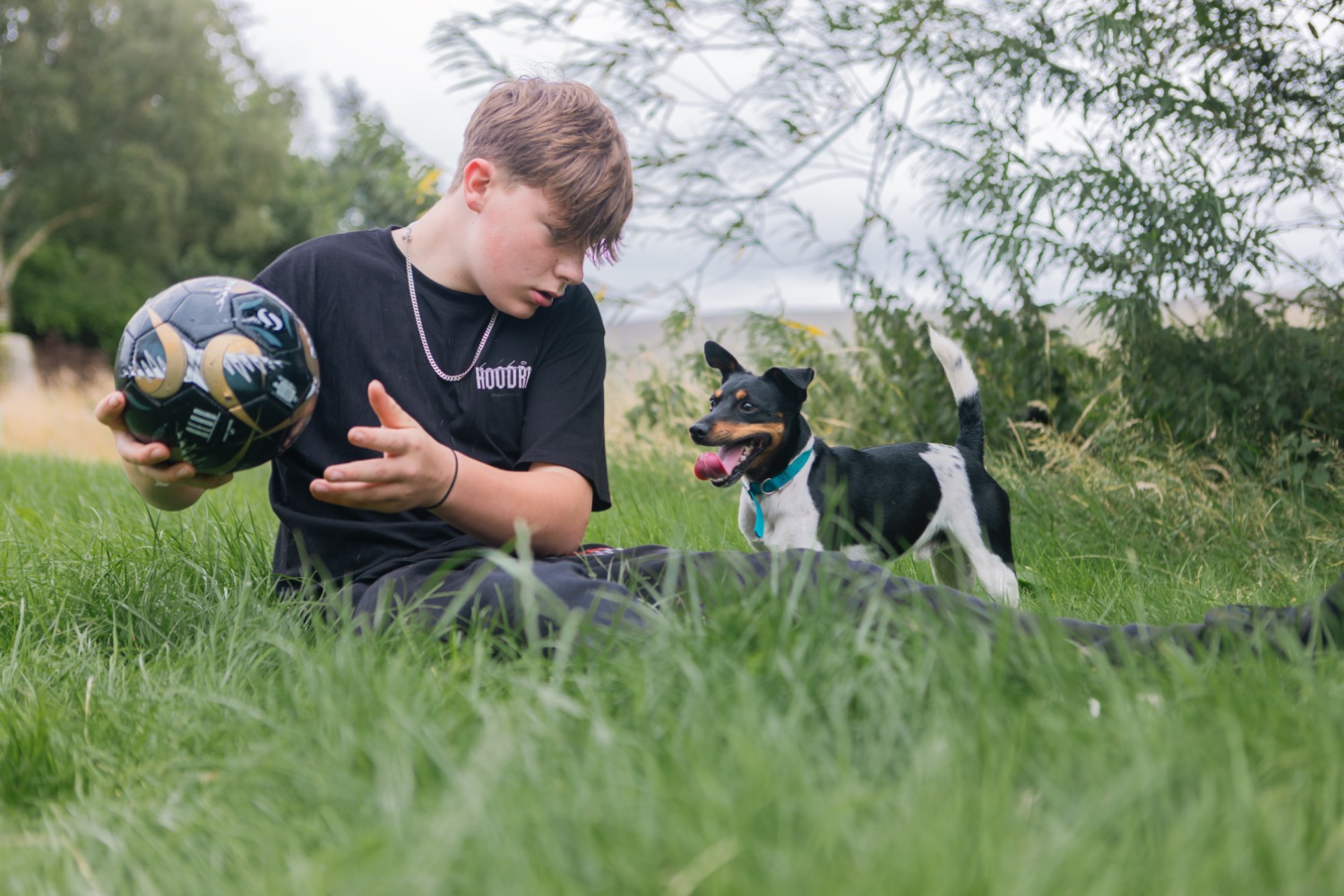
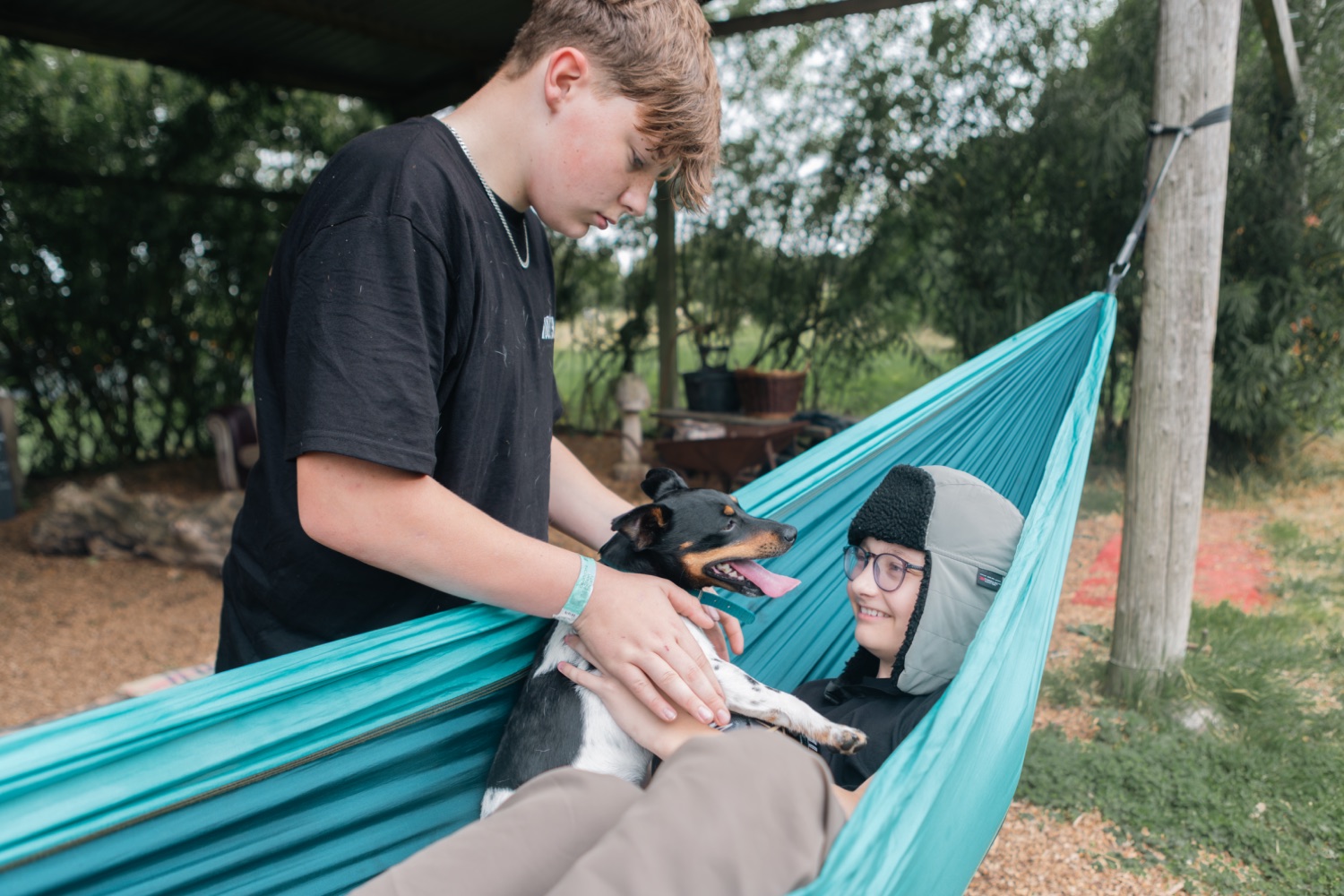
The farm dogs were regular visitors, offering comfort to campers while also trying to steal the football whenever possible. For young people who don’t have pets at home, those interactions can be particularly meaningful. We also saw cows, chickens, sheep, bees, butterflies and, eventually, a very special hedgehog.
Documenting, rather than directing
One of the things I love about documentary photography is that I don’t need to manufacture moments. My job is to create the conditions where people can forget about the camera and allow me to observe what is actually happening.
Before the camp, I talked to the young people about the project and the kinds of photographs I wanted to make. I invited them to let me document their experience rather than simply photographing them without context. I said they could just shake their head if they didn’t want to be photographed, they could ask me anything about what I was doing, and they could even have a go on my camera if they asked nicely!
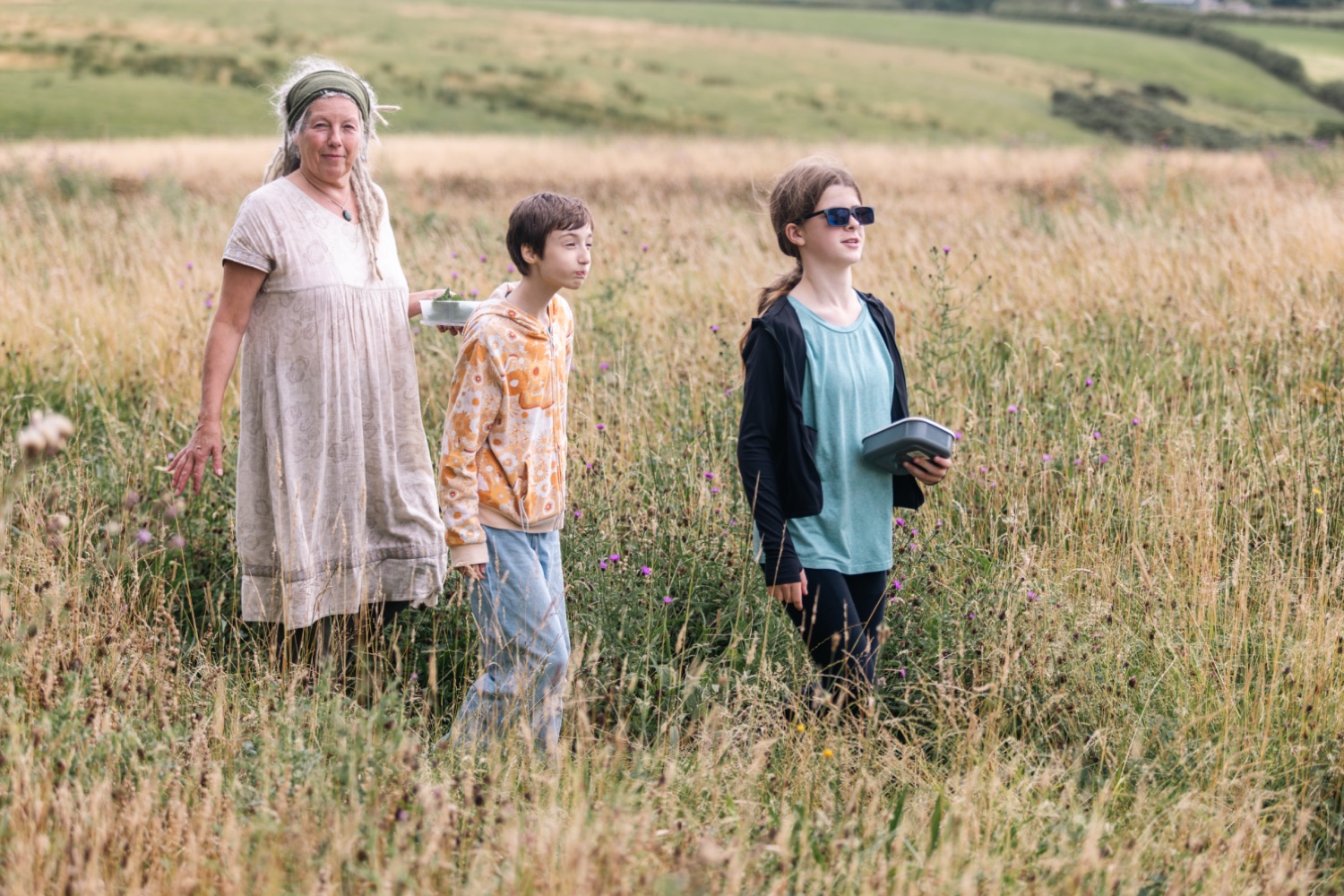
On the first day, Lesley took everyone out foraging.
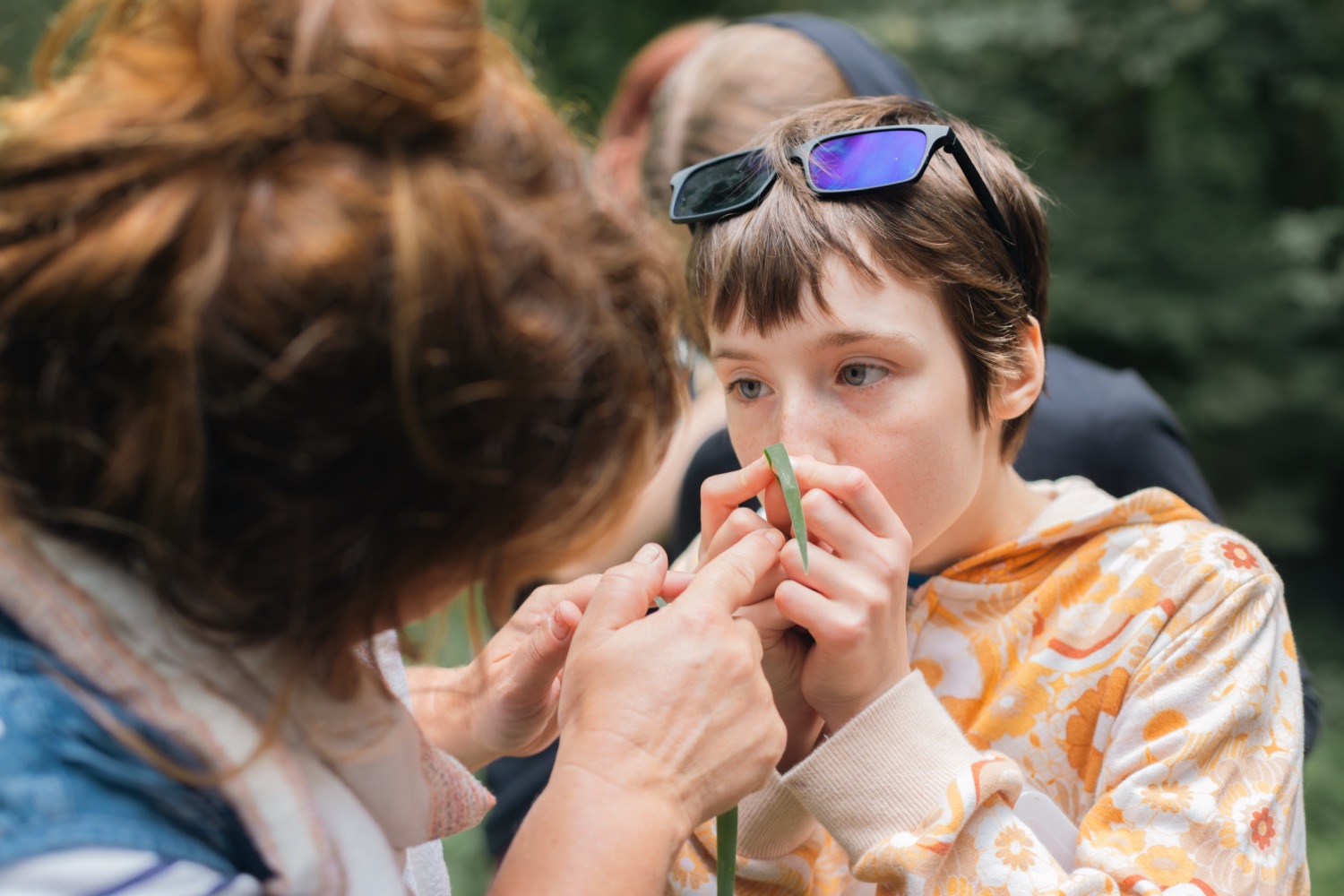
She stopped along the way to talk about different trees and plants, their medicinal qualities and whether they tasted good.
Meanwhile, the young people did what young people do. They found sticks to walk with, stones to skim into the river and taught each other how to whistle with grass.
They weren’t performing for the camera. They were just being themselves. That’s exactly what I want from documentary photography.
Nettle soup, butterflies and a very small patient
On the way home, a baby hedgehog was found alone and in need of some TLC. Helen rescued him and nursed him with goat’s colostrum from the farm. Me and Elsa did our best to remove little bugs from his nose and ears while he lapped milk.
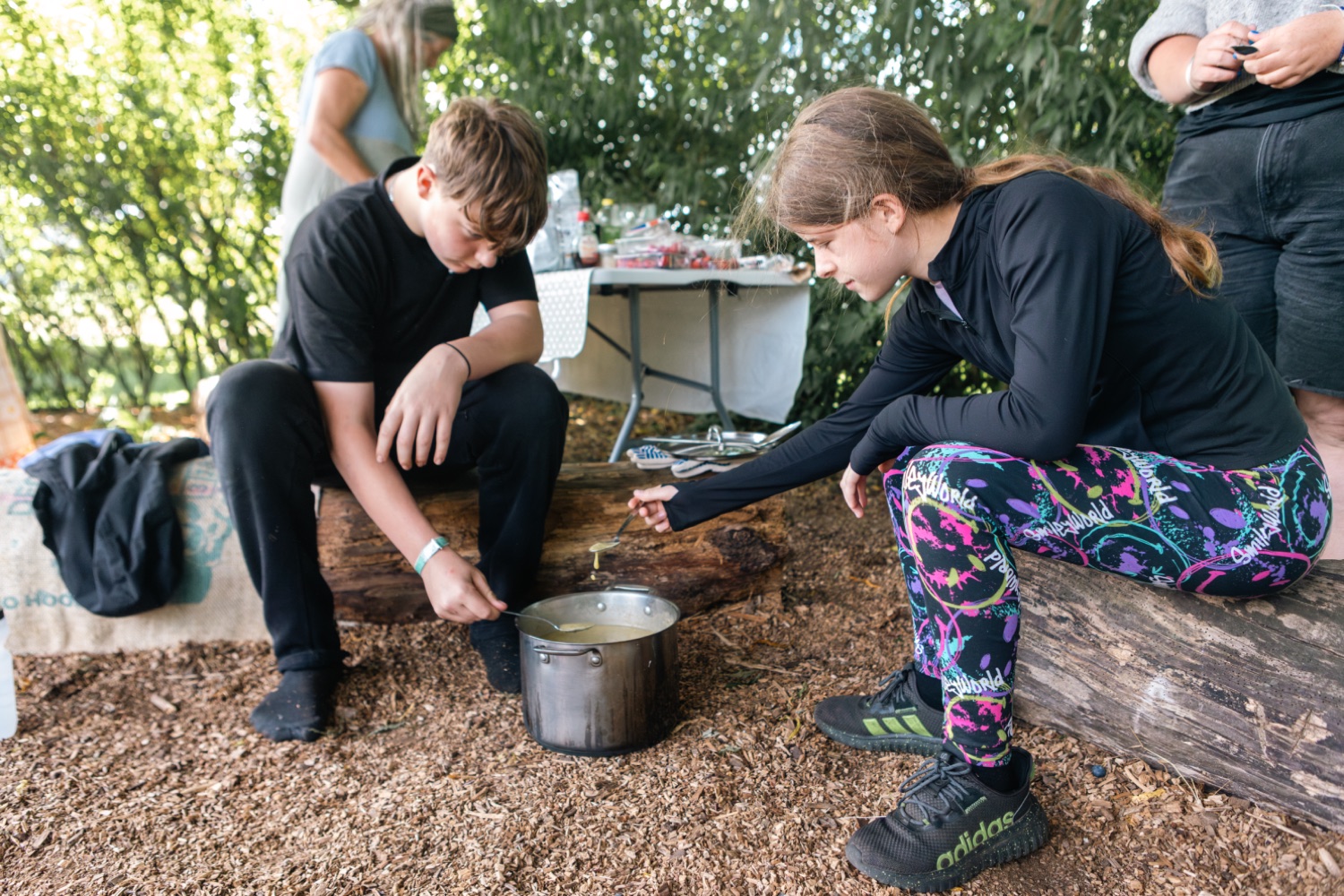
Meanwhile, the young people prepared nettle soup and garlic bread. I’ll admit I was sceptical of the soup. So were some of the young people.
But as one lad put it:
If I could eat this every night, I would.
And just like that, we were all nettle soup converts.
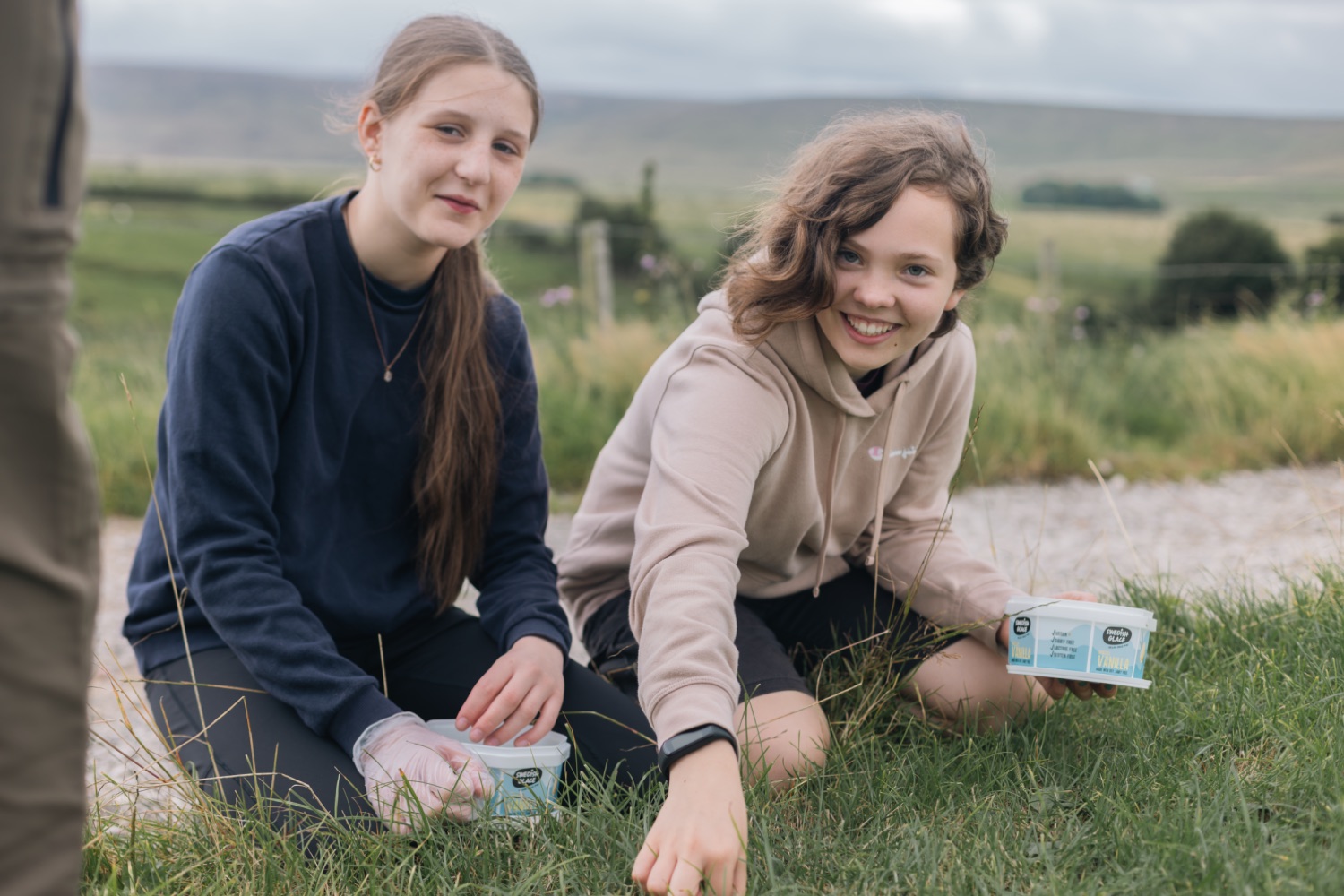
The following day brought butterfly traps, moths, beetles and two students from Lancaster University’s Environment Centre, who helped everyone learn more about the wildlife we’d found.
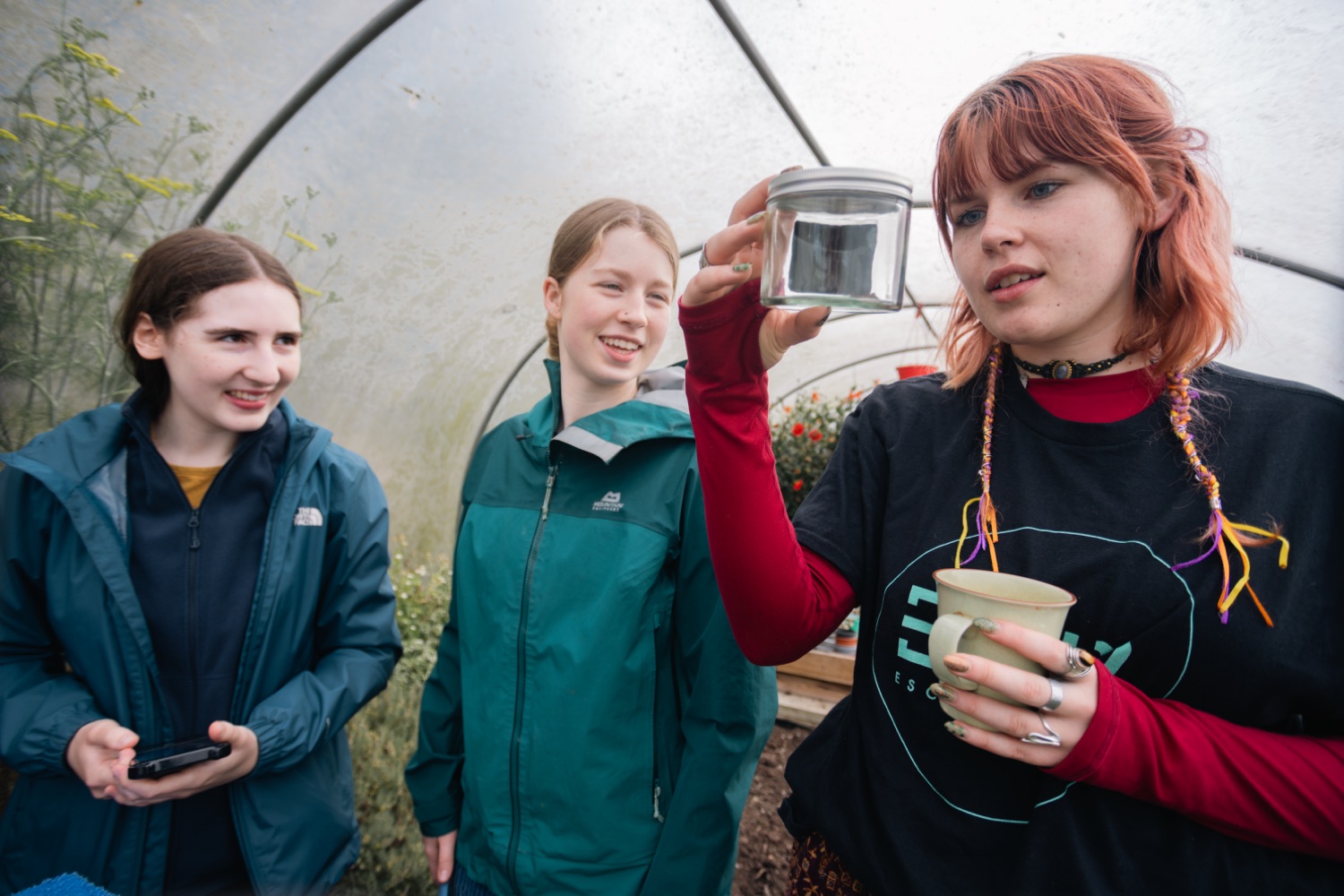
Then it was time to get creative.
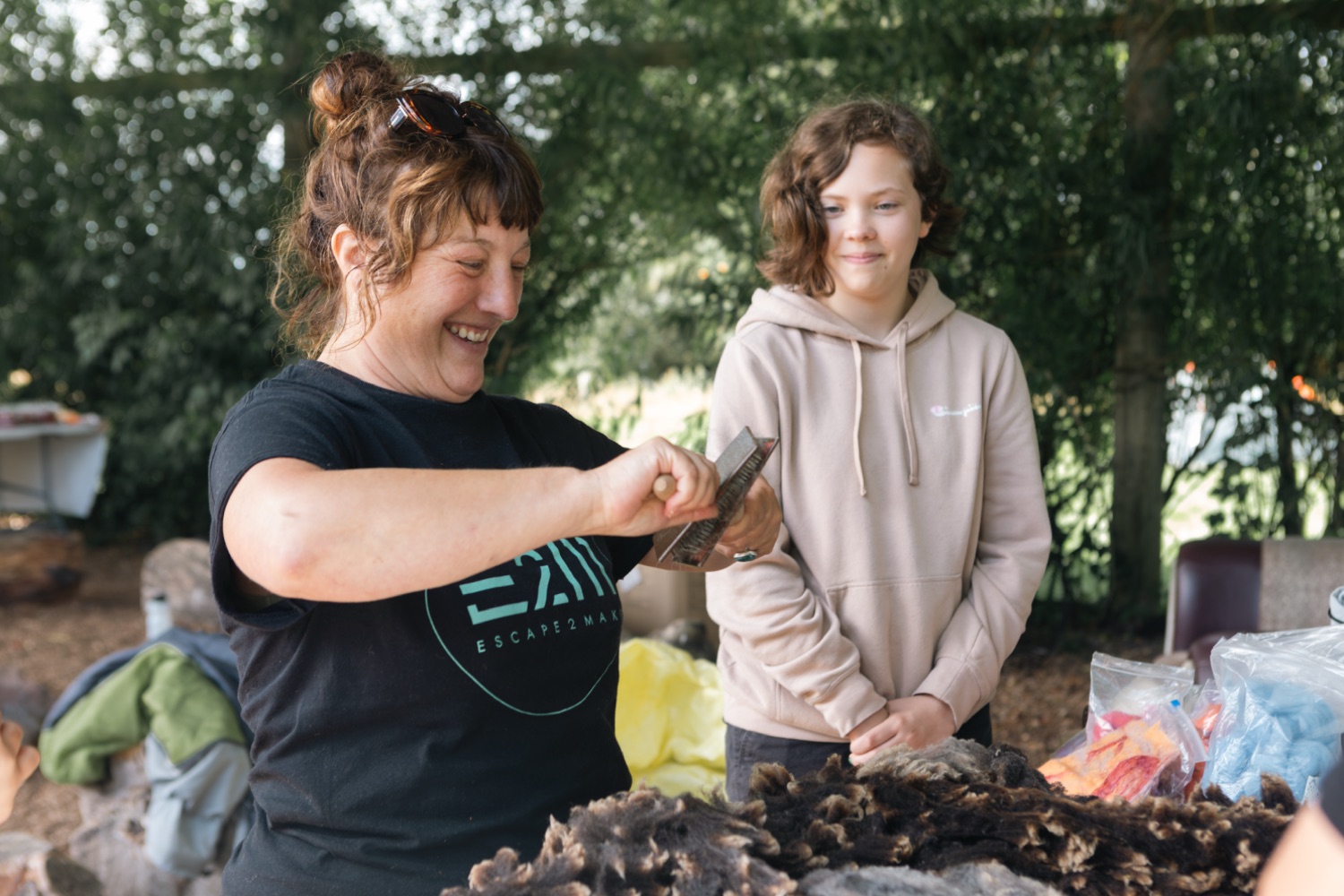
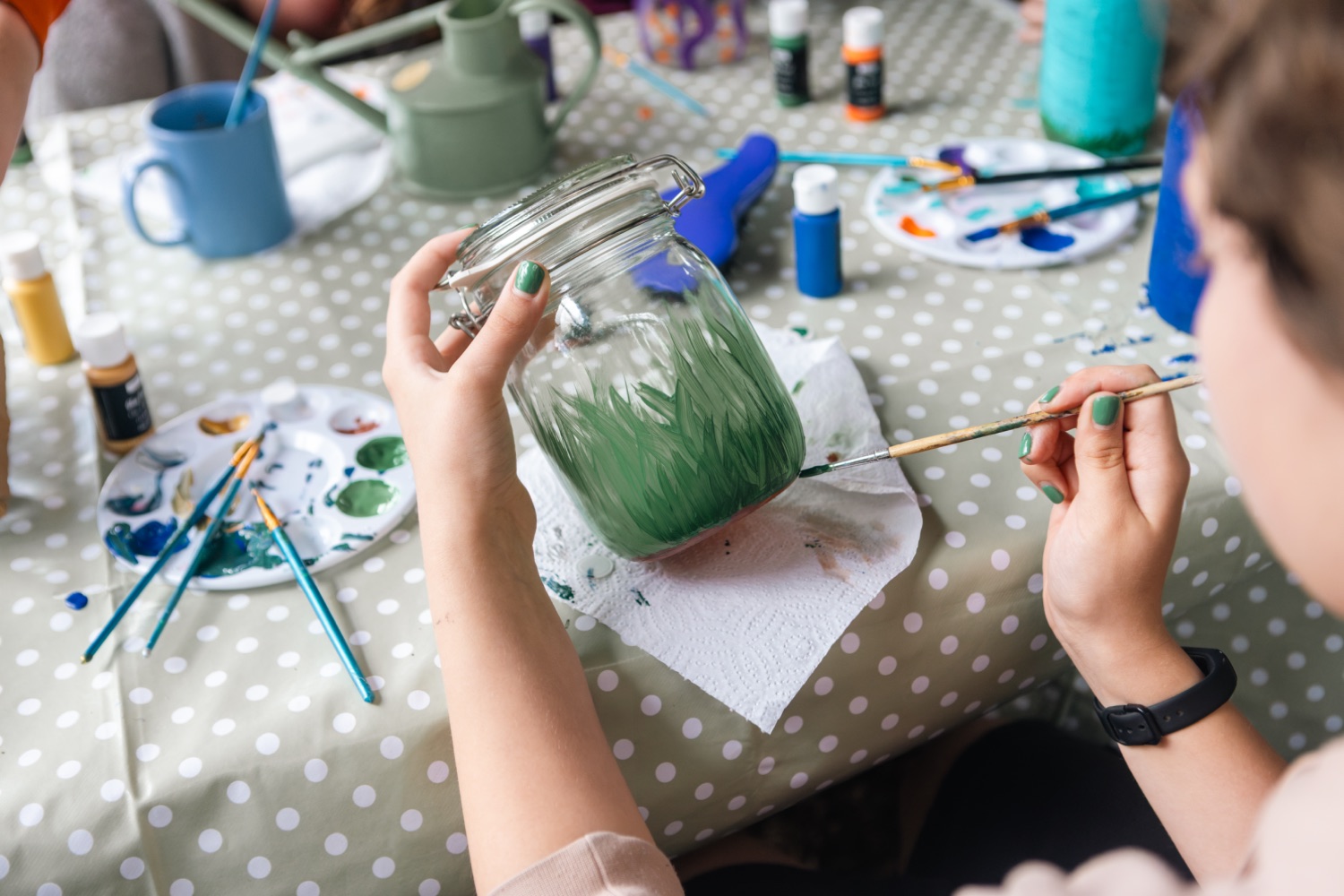
There was wool felting, weaving and glass jar painting. The designs were as varied as the young people themselves, with one inspired by Vincent van Gogh’s Starry Night and another by the South Park bus stop.
That variety is one of the things I love about youth work. Give young people the space to explore and you never quite know what they’re going to come up with.
The photographs are about connection
The young people were all incredibly interesting, with their own unique and quirky personalities.
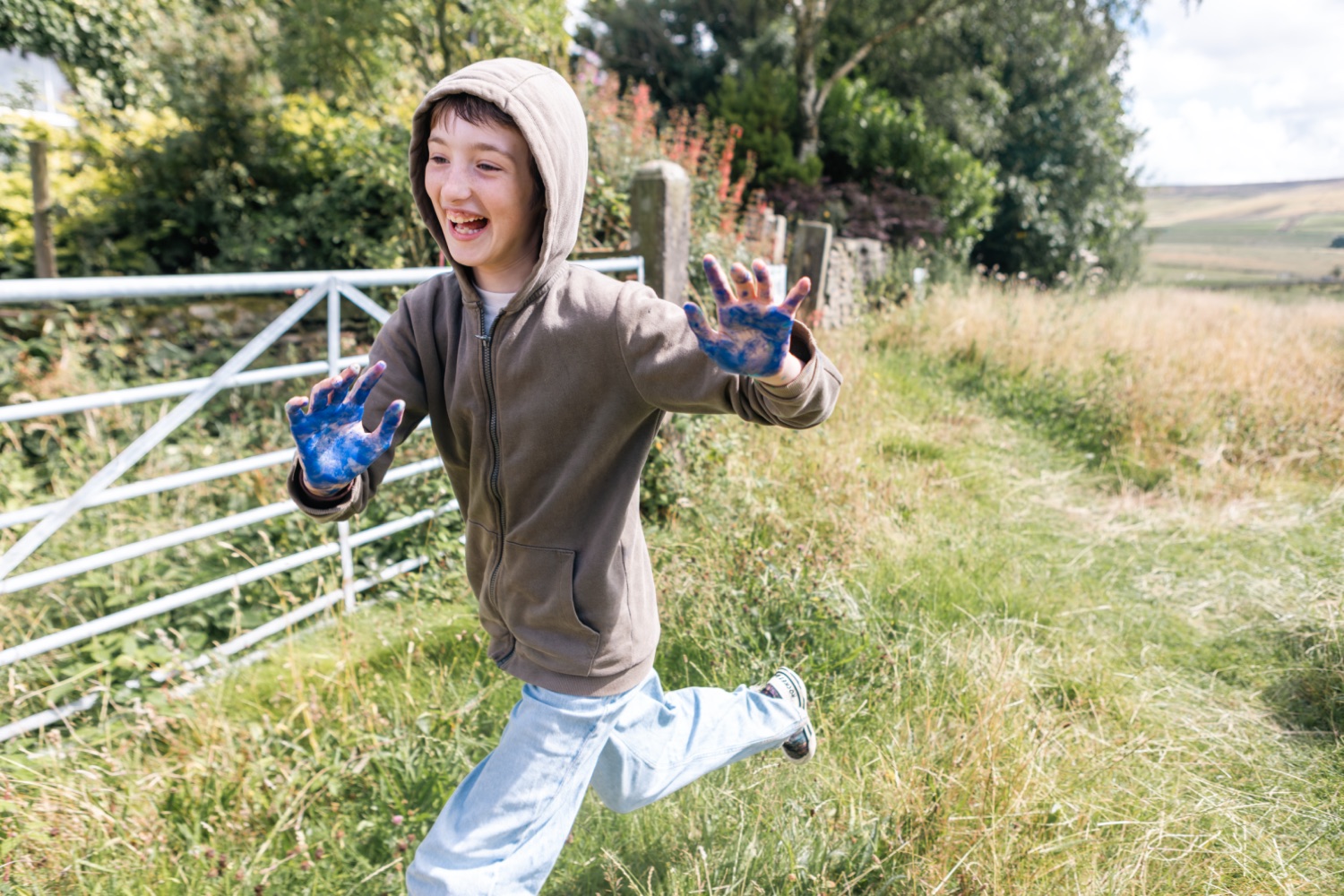
As they explored and created, they started sharing their experiences with me. They showed me what they’d found. They told me about themselves. They asked me questions. They goofed and giggled, dabbed, played patty-cake and told stories.
They let me in.
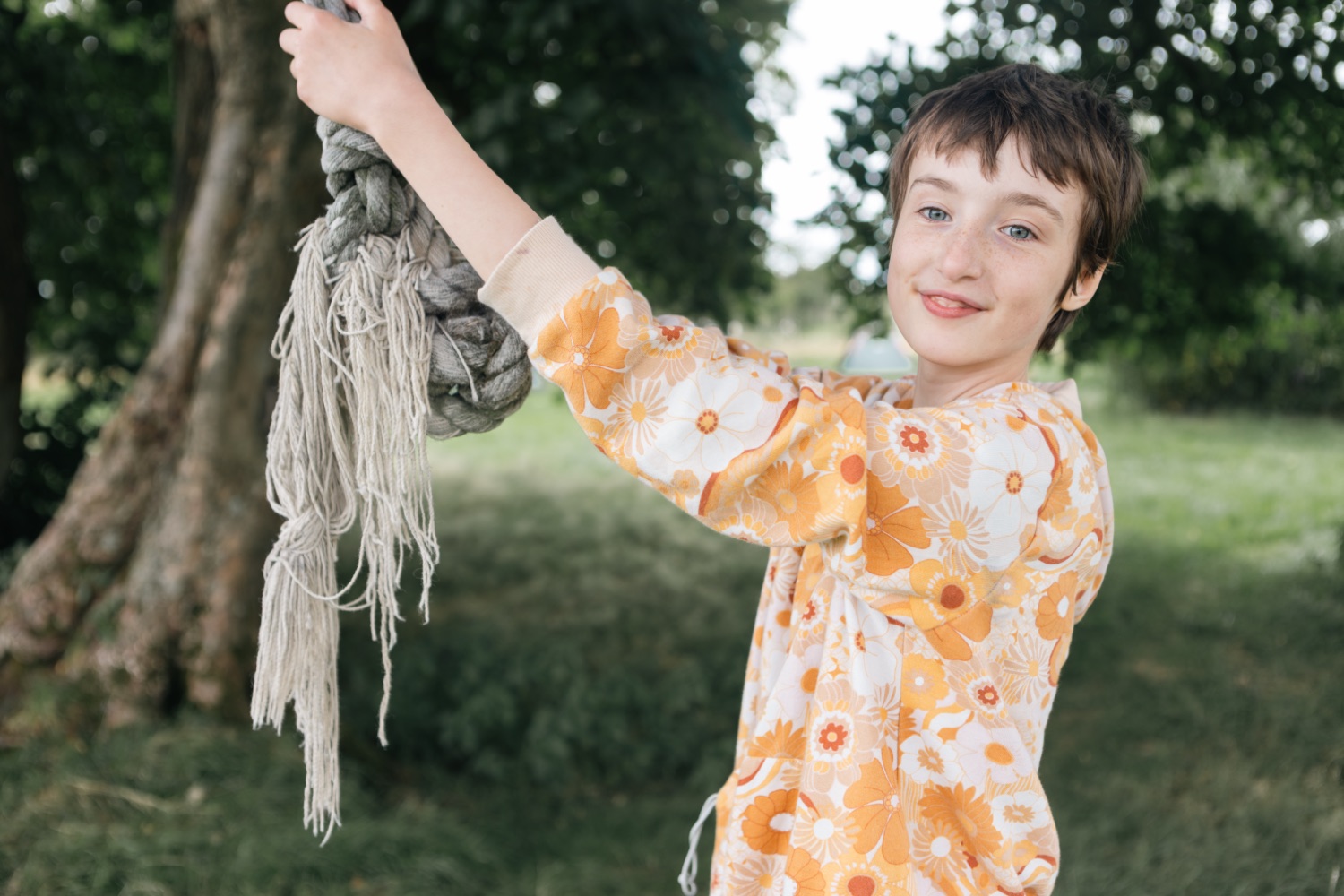
And that is probably the most important part of photographing people. The feeling when a young person trusts you to take their portrait is genuinely amazing. Being able to show them the photograph on the back of the camera and see their face light up is just magical.
The approval of teenagers is kind of the highest, or maybe rarest, praise, right?
Why this matters for social impact photography
For me, social impact photography isn’t simply about documenting what an organisation does. It’s about showing what that work actually means to the people experiencing it.
A photograph of someone taking part in an activity tells you what happened. A photograph of someone laughing with a new friend, confidently trying something for the first time, concentrating on something they’ve created or looking genuinely comfortable in a new environment can tell you something much deeper. It can show connection, confidence, belonging, curiosity, joy.
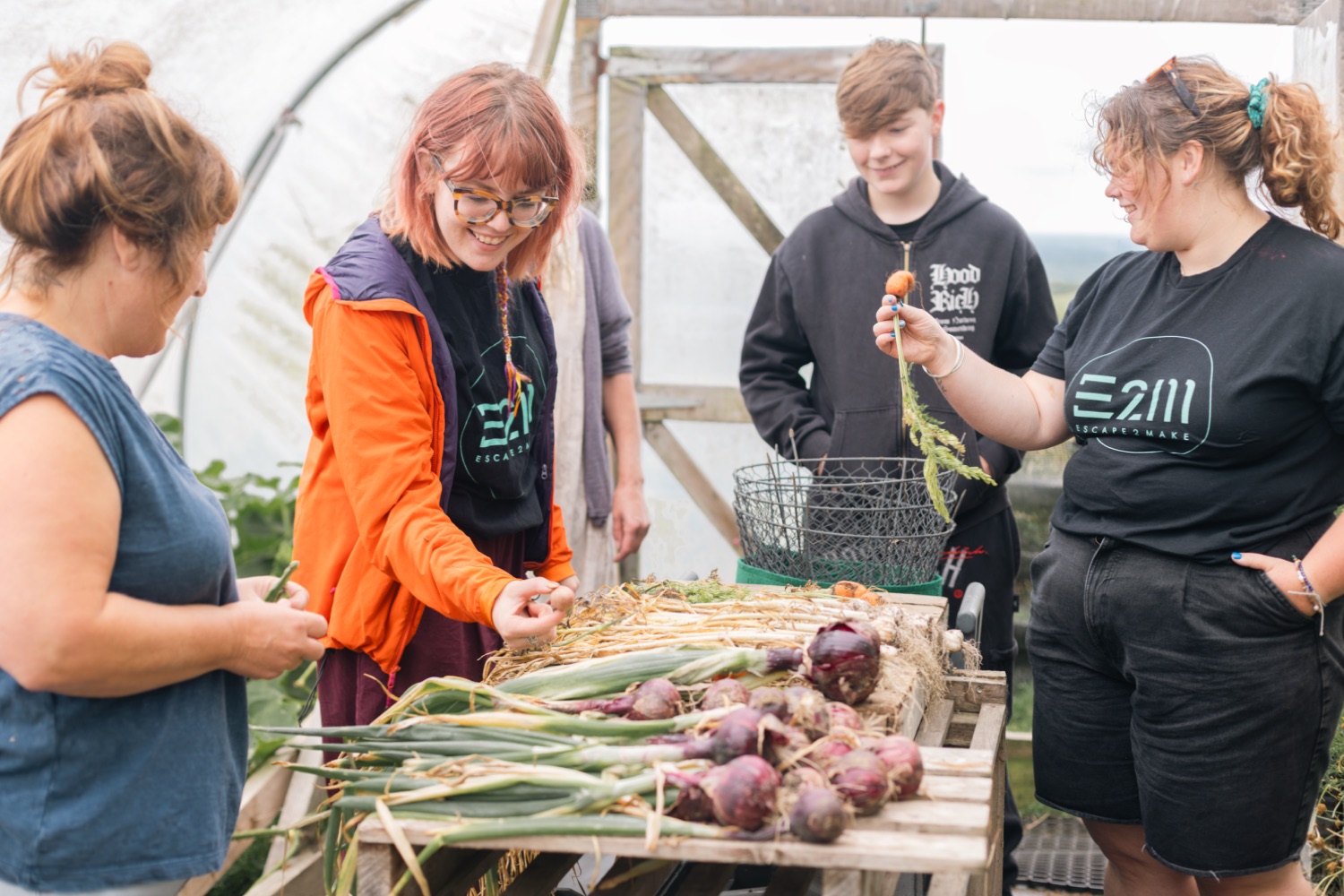
And those are often the things organisations are trying to create through their work. Escape2Make’s mission is ‘Make things, make friends, make a difference’, and the story of that mission happens through small actions, sharing something, including someone, or being silly together.
My experience as a youth worker and facilitator means I understand that you can’t always walk into a room with a camera and expect people to immediately trust you.
Sometimes the best photograph comes after you’ve put the camera down and had a conversation. Sometimes it’s the photograph you weren’t planning to take. Sometimes it’s a tiny moment between two people that would otherwise go unnoticed. That’s the side of the story I want my photography to capture.
More than just a record of what happened
Working with Escape2Make for so many years has given me the chance to see how their work develops and to understand the people and communities they work with.
Coming back as a photographer feels particularly special. I already understand the charity’s mission and impact, so I’m thinking about what photographs can communicate to someone who wasn’t there.
What can a photograph tell a parent? A funder? A potential volunteer? A partner organisation? Someone considering taking part for the first time?
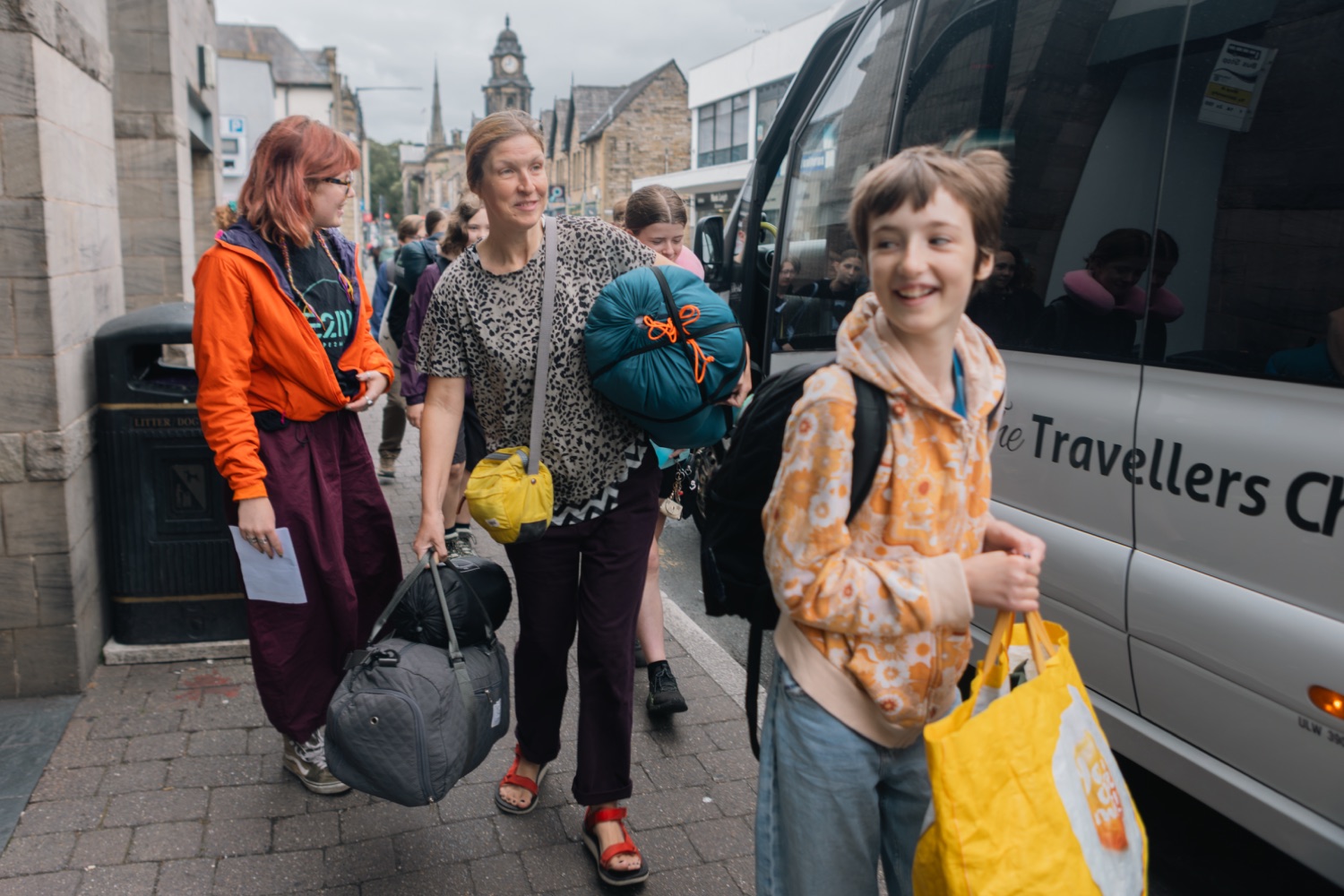
Good documentary photography can give people a way into a story. It can make an organisation’s impact visible. Most importantly, it can give the people at the centre of that work the opportunity to be seen.
It’s not just about documenting what happened, but showing why it mattered.
If you’re an organisation, charity or community project working with people and want photographs that capture the reality, personality and impact of what you do, I’d love to hear from you.